Subaru Outback
Subaru Listened: The Outback's Real Win Is Inside
An all-new seventh generation arrives boxier and taller, but the change four reviewers can't stop praising is the one Subaru reversed: the cabin.
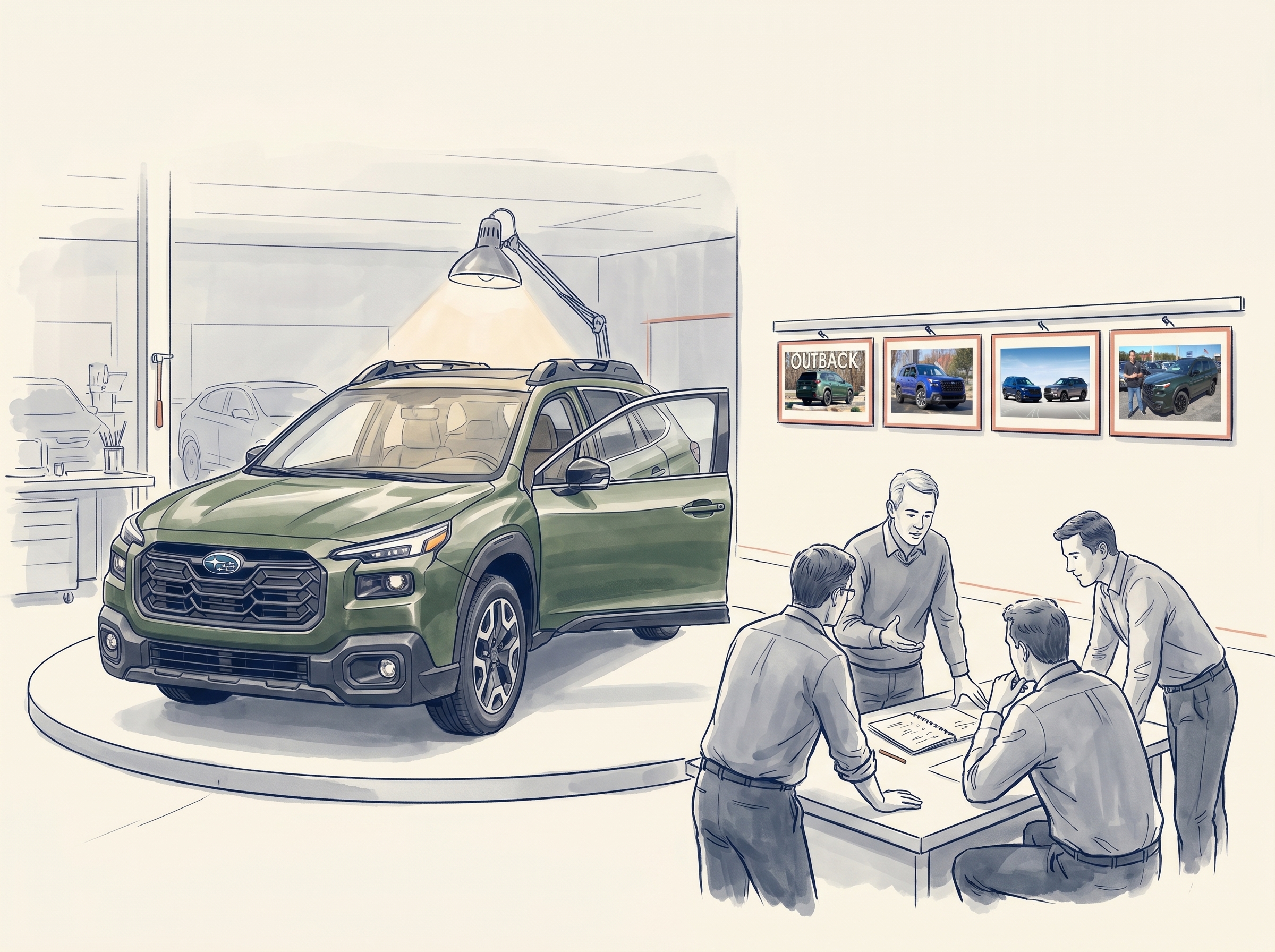
Park the styling debate for a moment. The headline of the seventh-generation Outback is not the upright new body or the trendy light bars — it is a row of physical climate knobs and a screen that finally responds. Four reviewers walked in from different angles and landed on the same verdict: the redesign's biggest win is the interior Subaru gave back to its buyers.
The Buttons Came Back
Walk through Savagegeese's review of the turbocharged Wilderness and the gratitude is almost startling. The HVAC controls are physical again, the drive modes live on the wheel and the console, and the Snapdragon-quick software loads before a thumb can reach it. "Huge marks for Subaru for actually listening to basically everybody," he says — and on the lift, the refinement story backs him up, the cabin roughly ten percent quieter than before. The point lands plainly: the most exciting thing about an all-new car is that Subaru stopped fighting its own customers.
Even the Loyalist Cheers
If anyone would defend Subaru's old ways, it is Redline Reviews, who spends an exhaustive week-long test insisting the Outback is still a wagon and that the internet has it wrong. Yet the upgrade he circles back to again and again is the same one — the 12.1-inch display that runs, by his estimate, several hundred times faster than the laggy portrait screen it replaces. He admits the old tech was "one of the reasons why I always gave pause when I was recommending a Subaru." The fix didn't just win converts; it satisfied the faithful.
The Forester Proves It
For proof that the new cabin is a deliberate gift and not a fluke, set it beside its showroom sibling. Edmunds, cross-shopping the Outback against the Forester, ranks the Outback the number-one mid-size SUV largely on this interior — then turns to the Forester's untouched system and calls it "the worst touchscreen that you can get in any compact SUV that's on the market today." Same brand, same model year. The Outback is where Subaru's listening shows up first, a preview of the lineup still to come.
A Win for Buyers
On the showroom floor, Raitis Rides cuts past the philosophy to the part a shopper feels: "Say what you want about the exterior, interior is definitely improved over the previous generation." He grumbles about cloth seats on a $44,000 Limited and a few mismatched trim pieces, but the verdict is plain — the knobs are back, the cabin is roomier, the visibility is excellent, and the value holds. For the buyer trading in a decade-old Outback, the redesign delivers exactly what was asked for.
10 out of 10, Subaru, thank you for listening
contrary to what the internet may want you to think, this vehicle definitely still feels like a lifted up station wagon
Subaru finally made an infotainment screen that is actually good to use
This is not a wagon anymore. This is a mid-size SUV
The reviewers, side by side
4 reviewers. 3 questions. Where the arguments overlap and where they diverge.
Subaru Gave People What They Wanted
Here is the surprise worth naming: four reviewers who agree on almost nothing — a marque skeptic, a card-carrying loyalist, a comparison-test referee, and a value hunter — all reached for the same word. Listened. Subaru spent the last generation chasing screens and lost the room; this time it asked owners what they actually use and built the cabin around the answer. Physical knobs, a display that responds, more headroom, more space. The interior is the redesign, and it belongs to the buyer.
The boldest thing Subaru did this year was listen.