Lotus Elise S1
The bonded-aluminium featherweight that rebooted Lotus.
13 reviewers · 21 videos · 4 hours watched
Reviewers strongly agree on its performance and handling, but split on daily drivability.
across 13 reviewers

"the series one managed to ride the line between fun and very much involved and also being able to be used on an everyday basis"
Goodwood Road & Racing · ▶ 12:17"it's not a practical family orientated vehicle"
Men and Motors · ▶ 5:28Performance
4.0/513 of 13 reviewersstrong consensus“it has more horsepower 14 3 break horsepower to be precise”
positive · Men and Motors · ▶ 0:28“this one's been on a dyno and it produces about 165 horsepower which is adequate in something that still weighs well under 800 kilos”
positive · JayEmm on Cars · ▶ 5:10“I can't believe how quick it is actually it's good fun”
positive · Goodwood Road & Racing · ▶ 10:15Handling
5.0/513 of 13 reviewersstrong consensus“Lotus have Rewritten the handling rule book this car is the perfect interaction between man machine and the road”
positive · Men and Motors · ▶ 2:10“the elise is steering as beautiful light so damn i mean look you can just drive it with your fingertips and actually that's the best way to drive it”
positive · JayEmm on Cars · ▶ 9:20“it's almost like a little go-kart you can really feel that 725 kg and that really revvy little four-cylinder working in complete unison together”
positive · Goodwood Road & Racing · ▶ 10:24Fun to drive
5.0/513 of 13 reviewersstrong consensus“within 100 yards you're going to be grinning from ear to ear”
positive · Men and Motors · ▶ 2:07“every time i get back in one of these i'm reminded of just how brilliant they are”
positive · JayEmm on Cars · ▶ 8:12“it's just wicked fun to take out on a b road take away for the weekend and that's everything you want in a car like this”
positive · Goodwood Road & Racing · ▶ 16:55Daily drivability
2.0/513 of 13 reviewerssplit“it's not a practical family orientated vehicle”
critical · Men and Motors · ▶ 5:28“if i had to do miles in it it would be really really winding me up”
critical · JayEmm on Cars · ▶ 11:46“from a passenger point of view it here's all the sophistication and ride comfort of a fairground dodgem ride”
critical · The Car Guys · ▶ 6:53Value
4.5/512 of 13 reviewersstrong consensus“i bought this elise for just 7 500 pounds”
positive · Number 27 · ▶ 3:11“I don't ever see these cars losing any money at all. They're 30 years old at this point. If anything, they've definitely reached the bottom of their depreciation curve already.”
positive · Mark Roden · ▶ 15:36“if you want the proper experience I think this is by far the better car”
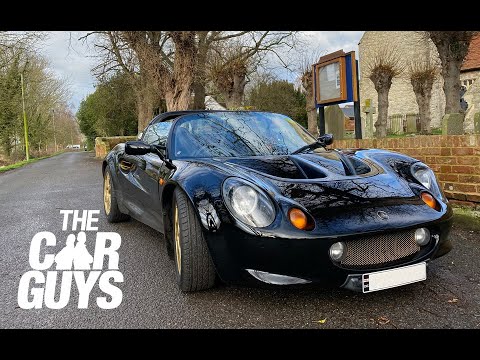
positive · JayEmm on Cars · ▶ 19:33The original. The S1 is the Elise in its purest form: a Rover K-series 1.8 (the 18K4F) behind your shoulders, around 118 hp in base tune, hung in a bonded-and-extruded aluminium tub weighing well under 800 kg. No power steering, no servo brakes, no slack — the unassisted steering and metal-matrix rotors are part of the period character. The hot variants are the ones enthusiasts chase: the VVC-engined 111S, and the track-built Sport 135/160/190. Livery specials (Type 49 Gold Leaf, Type 79 JPS) nod to the F1 history. The catch is the K-series head gasket — HGF is the S1's signature failure mode, and a sorted car has uprated gaskets and dowels. Where it places: the analogue benchmark the whole modern lightweight class descends from, and the most collectible Elise.
Hear it in the reviewer’s words





No primary articles scraped yet for this nameplate. Check back as the pipeline crawls more publications.
- 111SVVC K-series, ~143 hp
- Sport 135 / 160 / 190track-focused, escalating power
- Type 49 / Type 79Gold-Leaf and JPS livery editions
Rover K-series head-gasket failure (HGF) is the defining ownership risk — uprated gaskets and dowels are effectively mandatory. Early MMC brake rotors are costly to replace, and there's no brake servo, so pedal feel is firm by design.